- Suffolk County, NY
Suffolk County Roofing Company & Contractor— From Huntington To The East End
Suffolk is the biggest county on Long Island and no two ends of it are alike. Tree-covered lots through Brookhaven, exposed Sound-side homes in Huntington, cedar and open ocean wind on both forks. What works on one is wrong on the other.
Bluemaster Roofing is GAF Master Elite certified and works all ten Suffolk towns. Because the county runs eighty-six miles, we schedule crew days by zone rather than pretending everything is twenty minutes away. That means you get a real arrival window. Free written estimates, and financing available up to 100% of project cost, subject to credit approval.
Free Suffolk County Estimate
Tell us where you are and we will put you on the next crew day for your area.
Prefer to talk? Call 516-405-5590.
GAF Master Elite
Top 2% of US roofers
Free Written Estimates
Line-item, with photos
Licensed & Insured
Suffolk home improvement
50-year transferable warranty
GAF Shingles
Four Roof Problems Suffolk County Homes Keep Sending Us
Suffolk roofs fail differently than the rest of the Island. Heavier tree cover inland, salt and wind on both forks, and a great deal of 1960s and 70s housing stock reaching the end of its second roof at the same time.
01
Moss, Debris & Shaded Slopes
Heavy oak and pine cover through Brookhaven, Smithtown and Islip keeps north-facing slopes damp for months at a time. Moss lifts the shingle edge, needles pack into the valleys, and the deck underneath stays wet long after the roof looks dry from the street. Being honest about it: on a fair number of these the roof has years left, and the real fix is cutting back the limbs and clearing the valleys, which costs a fraction of anything we would quote you.
02
Wind Uplift On The Forks
From Montauk to Orient, roofs sit in a higher wind zone with almost nothing to break the gusts. Ridge caps peel, starter courses lift and nailing patterns that pass inland fail out east. We install to the wind rating the exposure actually needs.
03
Worn Cedar & Weathered Shake
Cedar is everywhere from Northport through the harbor villages and out to the Hamptons, and most of what fails does so from the fasteners and the ventilation path rather than the wood. Cupped shakes mean the underside never breathed. Rusted nails mean the wrong metal went in near salt air. Cedar that still has body to it is frequently repairable, and we will say so on the inspection rather than after.
04
Second-Roof Deck Failure
Central Suffolk was built fast through the 1960s and 70s, and a great many of those houses are now on their second or third covering. Layers get added, the original plank or thin plywood sheathing softens underneath, and nails stop holding. Once a deck flexes when you walk it, another round of repairs is money spent twice.
The six house types we work on most in Suffolk
Suffolk was built over roughly two hundred years, which is why the housing changes so completely as you head east. Knowing the era and the location tells us most of what we will find before the ladder goes up.
The Postwar Cape And Ranch
Amityville, Copiague, Lindenhurst, Deer Park, Bay Shore
Western Suffolk absorbed the overflow from the Nassau building boom, so whole blocks went up inside a few years of each other. Simple rooflines, low eaves, and almost all of them extended at some point since.
What we look for
The rear addition. Shingles laid over a pitch too shallow to shed water is the single most common leak on these houses. That section needs a low-slope membrane rather than another layer of shingle laid over the last one.
Split Levels and Hi-Ranches
Commack, Hauppauge, Holbrook, Ronkonkoma, Medford, Farmingville
Two or three roof planes at different heights, connected by short walls. Extremely common across central Suffolk and considerably more complicated than the shape suggests from the driveway.
What we look for
The step flashing where a lower roof meets an upper wall. Caulked or reused flashing at that junction is the most common leak on this house type, and it gets rebuilt properly on a replacement rather than sealed again.
The Colonial Belt
Smithtown, Nesconset, St. James, Setauket, Stony Brook, Shirley, Mastic
The largest building wave Suffolk ever had, and the reason so much of the county needs a second or third roof at the same time. Steeper pitches, attached garages, and usually a chimney with two or more dormers.
What we look for
The chimney and the dormer valleys. Wide chimneys built without a cricket behind them collect debris and hold water against the masonry, and dormer valleys on a shaded slope catch everything the trees drop.
North Shore Historic Homes
Northport, Port Jefferson, Stony Brook, Setauket, Huntington village
Victorians, Colonial Revivals and captain’s houses in the harbor villages, many of them on hillside lots. Steep, complicated rooflines with turrets, multiple dormers and original detailing worth preserving.
What we look for
Ice damming history along the eaves, because these slopes hold snow rather than shedding it. Also whether the original slate or cedar is genuinely finished, or whether the flashing failed and took the blame for it.
Farmhouses and Outbuildings
Riverhead, Southold, Mattituck, Jamesport and the North Fork
Working farmhouses alongside barns, equipment sheds and packing buildings. Often several structures on one property, each with a different roof age and sometimes a different system entirely.
What we look for
Whether the outbuildings should be done at the same time. Staging and mobilization are the expensive part of a trip this far east, so doing the barn on the same visit as the house usually saves real money rather than adding to the bill.
Cedar and Shingle Style
Southampton, East Hampton, Sag Harbor, Montauk, Quogue
Cedar shake and shingle on everything from original shingle-style cottages to modern builds designed to match them. Sweeping rooflines, deep overhangs and very little standing between the house and the ocean.
What we look for
Fastener condition first. Cedar out here usually outlives the nails holding it, and cupping means the shakes were never breathing from underneath. Historic district rules also decide what can go back on before anything else does.
The era narrows it down, the attic settles it. Knowing the house type tells us where to look, but the estimate is built from what is actually up there. We photograph the decking, the flashing and the ventilation on every Suffolk house before anything is priced, and those photographs are yours whether or not you hire us. Take them to two other contractors if you want a second read on the number.
Suffolk is a long county, so we schedule by zones rather than overpromise drive times. Western Suffolk: several days a week; Central Suffolk: usually within the week. The East End is batched into route days, so you get a firm date not a last-minute change. With cedar roofs, we inspect before recommending a tear-off; sound wood and failed nails can mean a very different job. Active leaks are the exception: if water is coming in, we come out that day.

Izzy Roditi
Owner and lead estimator, 30 years of local Long Island field experience Bluemaster Roofing
Homes And Businesses Across Suffolk
Residential Roofing
Ranches, splits, farmhouses and waterfront homes. Tear-offs, leak repair, cedar work, seamless gutters and ventilation corrections.
Commercial Roofing
Main street storefronts, industrial parks, restaurants and medical buildings. Carlisle TPO and EPDM, modified bitumen, coatings and maintenance plans.
Suffolk Roofs We Have Finished
How A Suffolk Job Runs, Step By Step
Same four steps whether you are in Amityville or Montauk. The only difference is which crew day your zone falls on.
Book Your Inspection
Call or send the form. We confirm the next crew day covering your Suffolk town and give you an arrival window rather than a vague morning.
Roof & Attic Report
We walk the roof, check the attic and the ventilation, and send you photographs of every finding with a written line-item price.
Permit & Install
We handle the town or village permit, protect landscaping, driveways and septic covers, then install with our own certified crew.
Sign Off & Warranty
Magnet sweep, debris hauled out, final walk with you, town inspection closed by us and your GAF warranty registered before we leave.
Six Suffolk Towns We Work In Most Often
We cover all ten Suffolk towns and every incorporated village. These six see our crews weekly.
Huntington
North Shore exposure and older colonials. Wind-rated replacements, chimney flashing and ice dam repair on steep hillside lots.

Babylon
South Shore storm work. Gutter replacement, tarping and full re-roofs on ranches and splits close to the canals and the bay.
Islip
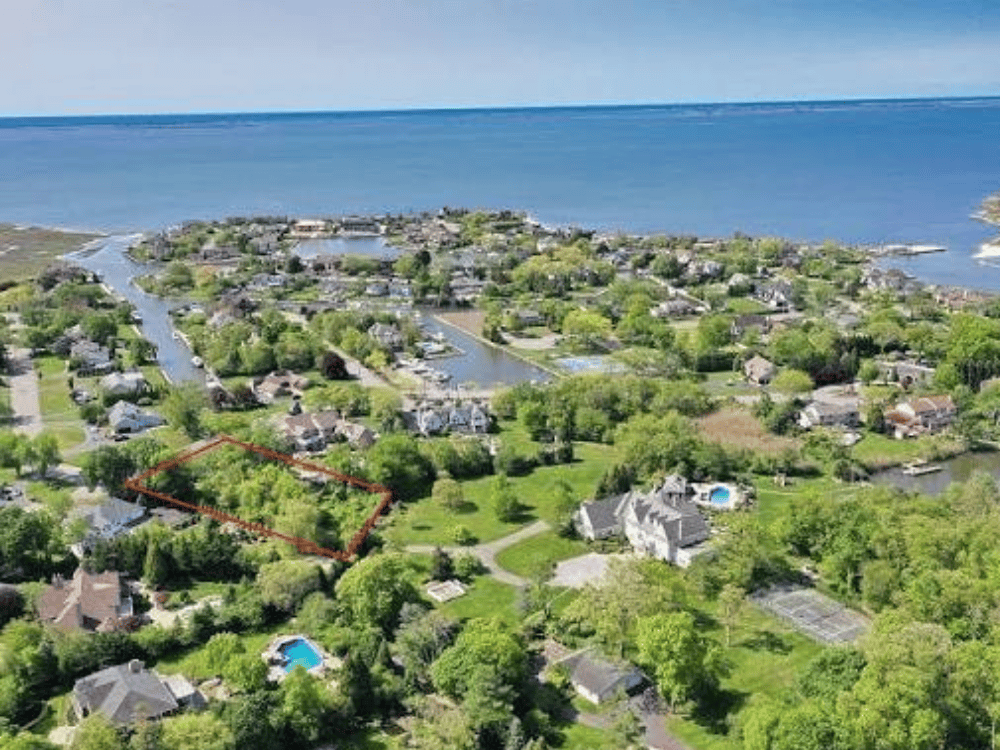
Heavy tree cover and shaded slopes. Moss removal, valley rebuilds, ventilation upgrades and replacements.
Smithtown
The colonial belt. Second and third roofs, dormer valley work and crickets built properly behind wide chimneys.
Patchogue
Village housing plus main street storefronts. Shingle replacements alongside TPO and EPDM flat work.
Riverhead
Farmhouses, barns and outbuildings. Multi-structure jobs quoted and staged as one trip east rather than three.
Every Suffolk town we cover, with ZIP codes
Grouped west to east rather than alphabetically, because how far out a house sits changes both the roof and the scheduling. If your town is not listed, it is almost certainly still in range. Call and give us the address.
Suffolk County
- Western Suffolk
11757
- Central Suffolk
- The East End
Not sure if we cover your street? Suffolk hamlets share ZIP codes constantly, and postal boundaries rarely match town or village lines out here. Call the office with the address and we will tell you straight away whether you are on a regular route or a scheduled route day.
Cedar Shake Failure On A Waterfront Home In Northport
34 sq
Cedar removed
3 days
On site
130 mph
Wind rating installed
$0
Change orders
The owners had lived with the same cedar roof for twenty-six years and had it patched twice, both times on the slope facing the harbor. The second contractor had told them the whole roof was finished and quoted a full cedar tear-off and replacement.
Our inspection found something more specific. We lifted shakes in four areas across both slopes. On the sheltered side the cedar was sound, the fasteners were intact and the wood still had body when pressed. On the water-facing slope it was a different roof entirely: split and cupped shakes across most of the field, fasteners corroded through where somebody had used galvanized rather than stainless, and two areas where the skip sheathing had rotted through around the chimney flashing.
We told them plainly that the sheltered slope had a few years left. What we also told them was that doing one slope on a twenty-six-year-old roof would mean paying for staging twice inside five years, and that the color match between new material and twenty-six-year-old cedar would be obvious from the street. They chose to do the whole roof, and that was their call rather than ours.
Cedar was not worth putting back on that exposure. We stripped it, replaced the rotted sheathing with solid plywood, ran ice and water shield over the full water-facing slope, and installed a wind-rated architectural shingle with stainless flashing detailed for salt air. The look stays in keeping with the street. The roof no longer needs an annual patch.
Three days on site, town permit closed by us, GAF warranty registered before we left.
BEFORE
AFTER
Suffolk is not one market. It is three.
Suffolk runs eighty-six miles from the Nassau line out to Montauk Point. Queens and Nassau are a different kind of market, but once you cross into Suffolk, the distances change fast. A house in Amityville and a house in Southold sit in the same county and have almost nothing in common, from the way they were built to the weather they take. Here is how we actually think about it.
Western Suffolk
25 to 45 minutes from East Rockaway
Central Suffolk
The East End
Western Suffolk
Amityville, Lindenhurst, Babylon, Bay Shore, West Islip, Huntington, Northport, Commack, Melville
What it feels like
Closer to Nassau than to the rest of Suffolk. Dense postwar development, smaller lots, and streets built out within the same few years.
Housing
Capes, ranches and split levels through the south, with older colonials and cedar-clad homes along the Huntington and Northport shoreline.
What fails
Ventilation and flashing. The same postwar problems as central Nassau, plus salt exposure on the canal and bayfront streets around Babylon and Bay Shore.
Scheduling
Normal routing. We are out here several days a week.
Central Suffolk
Smithtown, St. James, Stony Brook, Setauket, Port Jefferson, Patchogue, Medford, Farmingville, Shirley, Mastic
What it feels like
Bigger lots and far more tree cover. Oak and pine over most of it, which changes what a roof deals with year round.
Housing
The 1970s and 1980s colonial belt, plus the older harbor villages along the north shore where the housing goes back a century or more.
What fails
North-facing slopes and valleys. Shade keeps them damp for months, moss takes hold, and the valleys fill with needles and leaves until water backs up under the shingles.
Scheduling
Normal routing, usually within the week. Port Jefferson and the harbor villages add hillside access to think about.
The East End
Riverhead, Southold, Southampton, East Hampton, Montauk
What it feels like
A different island. Farmland, open exposure, and water on both sides once you pass Riverhead onto the forks.
Housing
Farmhouses and outbuildings on the North Fork, cedar shingle-style homes and estates on the South Fork, and a great deal of historic district work in both.
What fails
Wind, and it is not close. This is the most exposed roofing on Long Island. Ridge caps and starter courses that hold fine in western Suffolk lift out here, and salt reaches every fastener.
Scheduling
Route days. We batch East End work rather than pretending we can be there in an afternoon. You get a real date rather than a maybe.
We would rather tell you the truth about the drive than win the job and disappoint you on timing. Western Suffolk usually sees us inside two days. The East End is scheduled properly. Active leaks are the exception everywhere, and those get handled the day you call regardless of how far out you are.
Suffolk County Roofing , FAQs
Timelines, permits, cedar, insurance and how far east we actually go. If your question is not here, call the office and ask.
How far east do you go in Suffolk County?
All the way. We work every Suffolk town from Amityville and Huntington out through Brookhaven, Riverhead and both forks to Montauk and Orient. East End addresses are grouped onto set crew days so you get a firm arrival window instead of an open-ended wait for someone to happen to be in the area.
Who issues the roofing permit in Suffolk?
Your town or your incorporated village, depending on the exact address rather than your mailing town. Suffolk has ten towns, each with its own building department and its own submission requirements, plus villages that file separately. We identify the right one, file the permit and close out the inspection as part of the job. On the East End, historic district review can add time before work starts.
Can my cedar roof be repaired instead of replaced?
Often, yes, and this is worth asking before anyone quotes a tear-off. Cedar out here usually outlives its fasteners, so a roof that looks finished from the ground is sometimes sound wood on failed nails and flashing. We lift shakes in sample areas to find out which one you have. If the wood has body and the sheathing is dry, a repair costs a fraction of a replacement.
Does the Suffolk wind zone change how you install?
Yes, mostly in ways you cannot see from the street. On exposed Sound-side and East End roofs we increase the nail count per shingle, run starter course at the rakes as well as the eaves, hand-nail where the pattern has to be exact, and specify corrosion-resistant flashing and fasteners near salt air. A pattern that passes in Medford does not hold in Montauk.
How much does a roof replacement cost in Suffolk County?
Cost comes down to roof area in squares, how many layers come off, pitch, how much sheathing is rotted, the material you choose and how far east the job sits. Cedar and historic district work price differently than an asphalt re-roof on a Medford ranch.
Do you handle storm and insurance claims out here?
Yes. We photograph and document everything before anything is touched, tarp active leaks, and give your adjuster an itemized scope they can work from. Being straight with you: wind damage on a roof already past its service life is frequently denied as wear rather than storm damage, and we will say so before you file rather than after.
Does being on the water change what you install?
It changes the metal more than the covering. In Northport, Bay Shore, the canal streets around Babylon and anywhere on either fork, we specify stainless and corrosion-resistant flashing, fasteners and drip edge. Standard galvanized hardware rusts through years early that close to salt air, and the roof then fails at its weakest metal rather than its surface.
One Call Gets You A Real Number On Your Suffolk Roof
Free inspection, photographs of every finding, written line-item pricing, and financing available up to 100% of project cost, subject to credit approval. Bluemaster Roofing serves all Suffolk towns. Ask about $500 off a full replacement, plus our military and government employee discounts.